
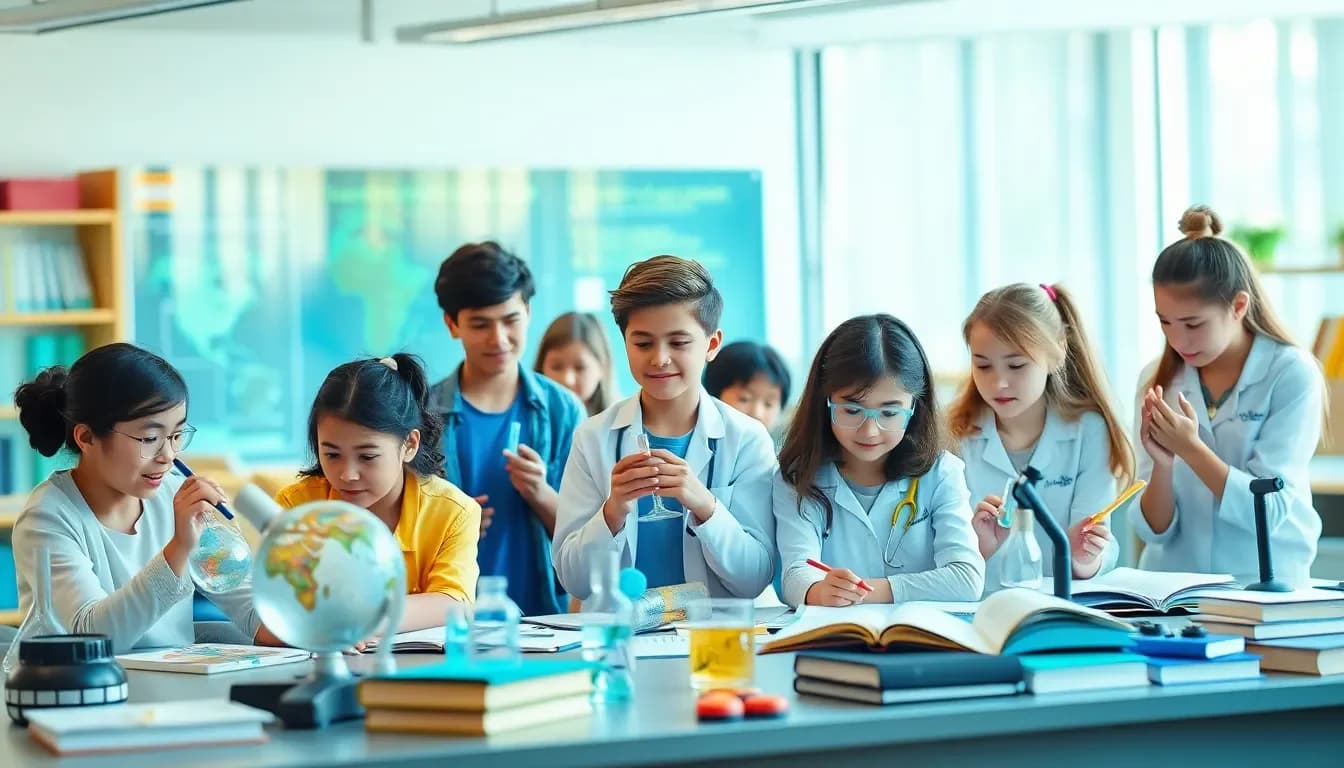
Introduction to Science and Education
Science and education are two interwoven pillars of society that play a crucial role in shaping our understanding of the world and preparing the next generation for future challenges. Science provides the knowledge and tools necessary for innovation, while education serves as the foundation for disseminating this knowledge. This article delves into the symbiotic relationship between science and education, current trends, challenges, innovative teaching methods, and the future landscape of both fields.
The Importance of Science in Education
Science is not merely a body of knowledge; it is a way of thinking and a method of inquiry. Integrating science into education is essential for several reasons:
- Critical Thinking:Science encourages students to ask questions, develop hypotheses, and engage in experiments, fostering a mindset of inquiry and critical analysis.
- Real-World Applications:Scientific concepts are often tied to real-world phenomena, making learning relevant and applicable to everyday life.
- Innovation and Problem Solving:A strong foundation in science prepares students to tackle complex problems and innovate solutions, which is vital in a rapidly evolving world.
The Role of Education in Scientific Advancement
Education plays a pivotal role in advancing science by:
- Training Future Scientists:Educational institutions cultivate the next generation of scientists by providing rigorous training and research opportunities.
- Promoting Scientific Literacy:A well-rounded education ensures that individuals can understand scientific concepts and engage with scientific discourse, which is essential for informed citizenship.
- Encouraging Collaboration:Educational settings often foster collaboration among students, researchers, and educators, driving scientific progress through collective effort.
Interdisciplinary Approaches
Science does not exist in a vacuum; it intersects with various disciplines such as mathematics, technology, engineering, and the arts (often referred to as STEAM). Interdisciplinary approaches in education:
- Enhance Learning:By connecting scientific principles to other fields, students can gain a more holistic understanding of concepts.
- Foster Creativity:Integrating the arts with science encourages students to think creatively and approach problems from multiple perspectives.
- Prepare for Complex Challenges:Many of today’s global challenges require solutions that draw on expertise from multiple disciplines.
Current Trends in Science Education
The landscape of science education is continuously evolving. Here are some of the current trends shaping the way science is taught:
Inquiry-Based Learning
Inquiry-based learning places students at the center of the learning process. Instead of passively receiving information, students engage actively with scientific questions:
- Encourages Curiosity:Students learn to ask questions and seek answers through investigation.
- Hands-On Experience:Laboratory experiments and fieldwork are integral components, providing practical experience.
- Promotes Engagement:Students are more likely to retain knowledge when they are actively involved in their learning process.
Integration of Technology
Technology has transformed science education in numerous ways:
- Access to Information:The internet provides vast resources, enabling students to explore scientific topics beyond the classroom.
- Online Simulations:Virtual labs allow students to conduct experiments in a simulated environment, making science accessible regardless of physical limitations.
- Collaboration Tools:Technology facilitates collaboration among students and educators, enhancing the learning experience.
Emphasis on STEM Education
STEM (Science, Technology, Engineering, and Mathematics) education has gained significant attention:
- Career Readiness:A focus on STEM prepares students for careers in high-demand fields.
- Encouraging Diversity:Initiatives aimed at increasing diversity in STEM fields are crucial for fostering innovation.
- Hands-On Learning:STEM education often incorporates project-based and experiential learning, enhancing student engagement.
Challenges in Science Education
Despite the advancements in science education, several challenges persist that hinder the effective delivery of science instruction:
Access to Resources
Access to quality educational resources remains a significant barrier in many areas:
- Funding Disparities:Schools in low-income areas often lack adequate funding for science programs and materials.
- Outdated Equipment:Many schools struggle with outdated laboratory equipment, limiting hands-on learning opportunities.
- Resource Availability:Access to digital resources and technology can vary widely, impacting students' learning experiences.
Teacher Training and Professional Development
Teachers are the backbone of education, yet many face challenges:
- Ongoing Training:Science is a rapidly evolving field, necessitating continuous professional development for educators.
- Support Systems:Teachers often lack sufficient support from administration and professional networks to implement innovative strategies.
- Burnout and Retention:High levels of stress and burnout can lead to high turnover rates among science educators, impacting student learning.
Addressing Diverse Learning Needs
Students come from diverse backgrounds and possess different learning styles:
- Differentiated Instruction:Teachers must adopt varied instructional strategies to meet the needs of all students.
- Inclusive Practices:Creating inclusive classrooms that accommodate students with disabilities is essential for equitable education.
- Cultural Relevance:Science curricula should reflect the diverse cultures and experiences of students to foster engagement and understanding.
Innovative Teaching Methods
To overcome challenges and enhance science education, educators are adopting innovative teaching methods:
Project-Based Learning
Project-based learning (PBL) encourages students to engage in real-world projects:
- Real-World Relevance:Students tackle meaningful problems, applying scientific concepts to develop solutions.
- Team Collaboration:PBL often involves group work, fostering teamwork and communication skills.
- Critical Thinking:Students must analyze information, make decisions, and reflect on their learning throughout the project.
Flipped Classrooms
The flipped classroom model reverses traditional teaching methods:
- Pre-Class Learning:Students learn new content at home through videos and readings, freeing up class time for interactive activities.
- Active Learning:In-class time is dedicated to discussions, problem-solving, and hands-on experiments, enhancing engagement.
- Personalized Learning:Students can learn at their own pace, reviewing materials as needed before class.
Use of Simulations and Virtual Labs
Simulations and virtual labs provide students with immersive learning experiences:
- Access to Complex Systems:Students can experiment with scenarios that may be difficult or impossible to replicate in a physical lab.
- Safe Learning Environment:Virtual labs allow for experimentation without the risks associated with real-world labs.
- Immediate Feedback:Many simulations provide instant feedback, helping students learn from their mistakes in real-time.
The Future of Science and Education
The future of science and education is promising, marked by advancements and collaborative efforts:
Emerging Technologies in Education
Technological advancements will continue to shape the future of education:
- Artificial Intelligence:AI can personalize learning experiences, adapting content to meet individual student needs.
- Augmented Reality (AR):AR can enhance interactive learning by overlaying digital information onto the real world, providing immersive experiences.
- Gamification:Incorporating game-like elements in education can motivate students and enhance engagement.
Global Collaboration and Research
The global nature of science necessitates collaboration across borders:
- International Partnerships:Schools and universities can collaborate on research projects, exchanging knowledge and resources.
- Cross-Cultural Learning:Students can participate in global science initiatives, broadening their perspectives and understanding.
- Shared Resources:Collaborative platforms can provide access to a wealth of educational materials and research findings.
Preparing Students for Future Careers
As the job market evolves, education must adapt to prepare students for future careers:
- Skills Development:Emphasis on critical thinking, problem-solving, and collaboration will be essential for success in the workforce.
- Career Guidance:Educators must provide students with insights into STEM career paths, including emerging fields and opportunities.
- Continued Learning:Fostering a love for lifelong learning will equip students to adapt to changes and advances in their fields.
In conclusion, the relationship between science and education is vital for fostering innovation, critical thinking, and informed citizenship. By embracing current trends, addressing challenges, and implementing innovative teaching methods, educators can create a more effective and engaging science education landscape. The future of science education holds immense potential, and by working together, we can ensure that students are well-equipped to navigate and contribute to an increasingly complex world.