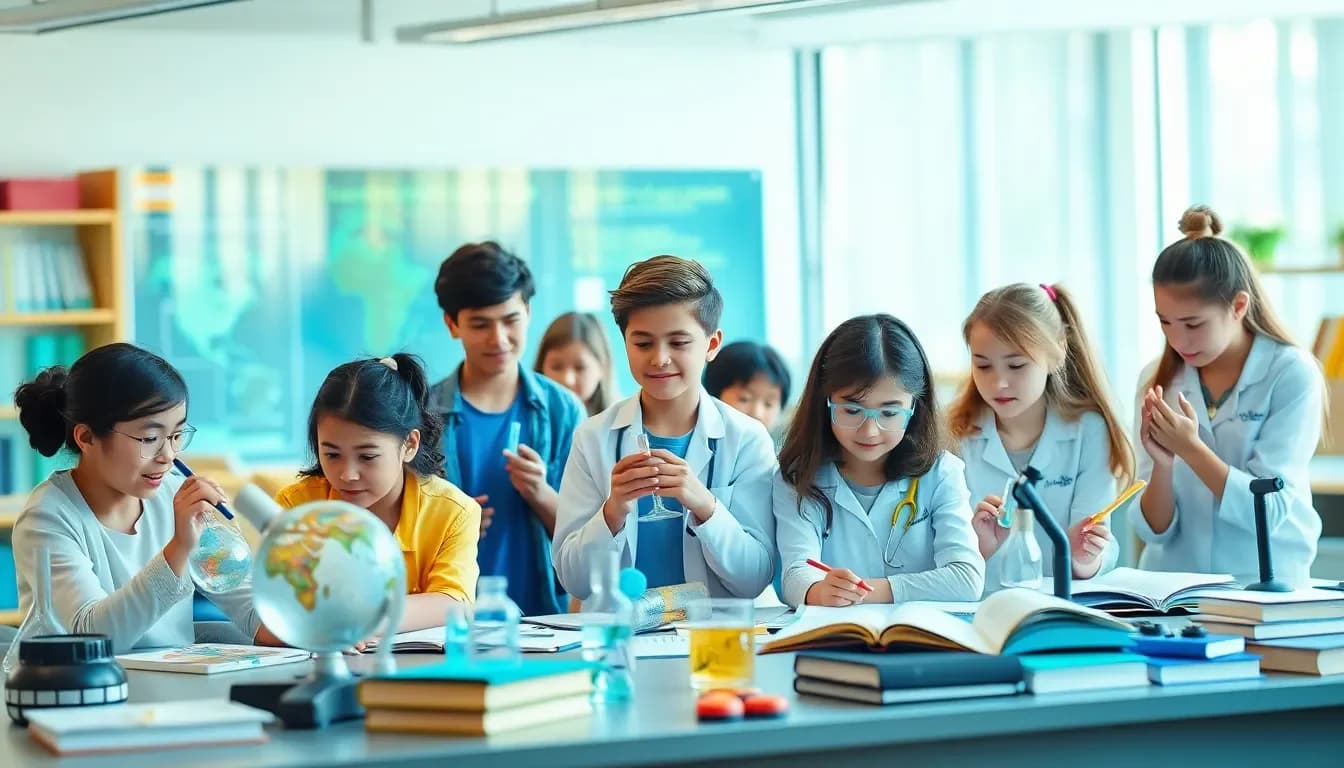
Introduction to Science and Education
Science and education are intrinsically linked, forming a foundational pillar for developing critical thinking and problem-solving skills in students. As society becomes more technologically advanced, the role of science education becomes increasingly vital. This article explores the importance of science in education, its historical context, current trends, key concepts, challenges, innovations, and the future outlook of science education.
The Importance of Science in Education
Science education plays a crucial role in fostering a scientifically literate society. It equips students with the necessary skills to understand and engage with the world around them. The importance of science in education can be summarized in the following ways:
- Critical Thinking:Science encourages students to think critically and analyze information systematically.
- Problem Solving:Through scientific inquiry, students learn to approach problems methodically, testing hypotheses and evaluating outcomes.
- Inquiry and Curiosity:Science education nurtures a sense of curiosity, prompting students to ask questions and seek answers.
- Informed Citizens:A solid foundation in science helps individuals make informed decisions about health, environment, and technology.
Historical Context of Science Education
The evolution of science education has undergone significant transformations throughout history. In ancient civilizations, scientific knowledge was often tied to philosophy and religion. The scientific revolution in the 16th and 17th centuries marked a pivotal shift, leading to the establishment of the scientific method and an emphasis on empirical evidence.
In the 19th century, formal science education began to emerge, with institutions like universities and research centers being established. The introduction of standardized curricula in the 20th century further advanced science education, focusing on the natural sciences like biology, chemistry, and physics.
Current Trends in Science Education
As we progress into the 21st century, several trends are shaping the landscape of science education:
- Interdisciplinary Approaches:There is a growing trend to integrate science with other disciplines, such as technology, engineering, arts, and mathematics (STEAM).
- Emphasis on Environmental Education:With the rising concern for climate change and sustainability, environmental science is gaining prominence in educational curricula.
- Use of Technology:The integration of technology in the classroom, such as virtual labs and simulations, is enhancing the science learning experience.
Key Concepts in Science Education
The Scientific Method
The scientific method is a systematic approach to inquiry that involves observation, hypothesis formulation, experimentation, analysis, and conclusion. It is foundational to scientific investigation and education:
- Observation:Gathering information through the senses or instruments.
- Question:Formulating questions based on observations.
- Hypothesis:Proposing a testable explanation for the observed phenomenon.
- Experimentation:Designing and conducting experiments to test the hypothesis.
- Analysis:Analyzing data and drawing conclusions.
- Communication:Sharing results with the scientific community.
STEM Education
STEM education, which stands for Science, Technology, Engineering, and Mathematics, emphasizes the interconnectedness of these disciplines. It prepares students for future careers in the rapidly evolving job market. Key elements of STEM education include:
- Hands-On Learning:Engaging students in practical applications of scientific concepts.
- Problem-Based Learning:Focusing on real-world problems that require interdisciplinary solutions.
- Collaboration:Encouraging teamwork and communication among students to foster innovation.
Inquiry-Based Learning
Inquiry-based learning is an educational approach that promotes student engagement through exploration and questioning. Instead of traditional rote learning, students are encouraged to:
- Ask Questions:Formulate their own questions based on their interests.
- Conduct Investigations:Engage in hands-on experiments to seek answers.
- Reflect on Learning:Analyze what they have learned and how to apply it in different contexts.
Challenges in Science Education
Access and Equity Issues
One of the most pressing challenges in science education is ensuring access and equity for all students. Disparities exist due to socioeconomic status, geographic location, and institutional resources. To address these issues, educators and policymakers must:
- Increase Funding:Allocate resources to underserved schools and communities.
- Provide Training:Offer professional development for teachers to deliver quality science education.
- Enhance Curriculum:Create inclusive curricula that reflect diverse perspectives and experiences.
Teaching Methods and Pedagogy
The effectiveness of science education relies heavily on teaching methods and pedagogical approaches. Traditional methods may not engage today’s learners, leading to challenges in comprehension and retention. Educators are encouraged to:
- Incorporate Active Learning:Use strategies like group discussions, peer teaching, and interactive demonstrations.
- Differentiate Instruction:Tailor lessons to meet the diverse learning needs of students.
- Utilize Assessment Feedback:Provide constructive feedback to support student growth and understanding.
Student Engagement and Motivation
Keeping students engaged and motivated in science can be challenging. Factors that contribute to disengagement include perceived difficulty, lack of relevance, and uninspiring teaching. To enhance engagement, educators should:
- Link Science to Real Life:Show students how scientific concepts apply to their everyday lives.
- Use Gamification:Introduce game-like elements to make learning fun and interactive.
- Encourage Student Choice:Allow students to explore topics that interest them within the curriculum.
Innovations in Science Education
Technology Integration in the Classroom
The integration of technology has transformed the landscape of science education. Innovative tools and resources, such as:
- Virtual Laboratories:Allow students to conduct experiments in a simulated environment.
- Online Resources:Provide access to a wealth of scientific information and data.
- Interactive Software:Engage students through simulations and modeling of scientific phenomena.
These technologies enhance the learning experience and make science more accessible and engaging.
Hands-On Learning and Experiential Education
Hands-on learning and experiential education are essential components of effective science teaching. They involve:
- Field Trips:Taking students to museums, laboratories, and nature reserves to experience science in real-world contexts.
- Project-Based Learning:Engaging students in long-term projects that require investigation and application of scientific concepts.
- Community Engagement:Involving students in local science initiatives and research projects.
Collaborative Learning Approaches
Collaboration among students enhances learning experiences and fosters social skills. Collaborative learning approaches include:
- Group Projects:Encouraging teamwork to solve scientific problems or conduct research.
- Peer Review:Allowing students to critique each other's work, fostering a deeper understanding of scientific concepts.
- Science Fairs and Competitions:Providing opportunities for students to showcase their work and learn from peers.
The Future of Science Education
Global Perspectives on Science Education
The future of science education is increasingly influenced by global perspectives. As the world becomes more interconnected, educators must consider:
- Cross-Cultural Collaboration:Engaging in international projects that promote scientific inquiry and collaboration.
- Diverse Educational Models:Learning from different educational systems and practices around the world.
- Global Issues:Addressing universal challenges, such as climate change, public health, and technology ethics.
Preparing Students for Future Careers
With the rapid advancement of technology and changing job markets, preparing students for future careers is essential. This includes:
- Skills Development:Focusing on critical thinking, problem-solving, and technical skills relevant to the workforce.
- Career Exploration:Providing opportunities for students to explore various scientific careers through internships, mentorships, and industry partnerships.
- Continuous Learning:Encouraging a mindset of lifelong learning to adapt to future changes in the job market.
The Role of Policy in Science Education
Educational policies play a critical role in shaping science education. Policymakers must prioritize:
- Curriculum Development:Ensuring science curricula are relevant, rigorous, and inclusive.
- Teacher Support:Providing resources and professional development opportunities for science educators.
- Assessment and Accountability:Implementing fair assessment practices that measure student learning and progress in science.